
East West Rail Launches Advisory Board to Protect Archaeology and Heritage
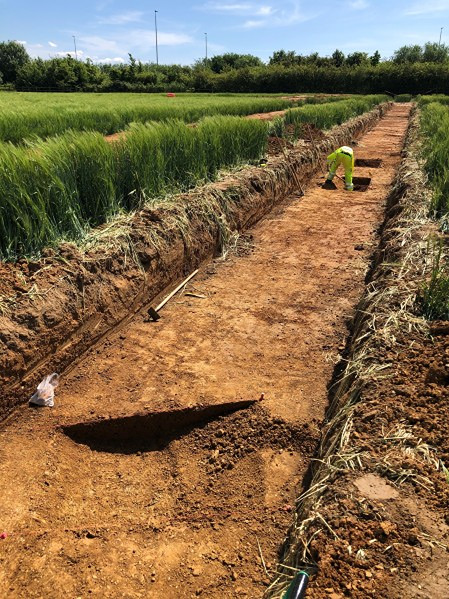

East West Rail has launched a new Historic Environment Advisory Board to provide independent guidance on protecting and managing archaeology and heritage along the Oxford to Cambridge route. The board brings together experts from academic, scientific, and professional backgrounds, alongside key stakeholders, to review the project’s approach to heritage preservation.
Similar advisory boards have been successfully used on major projects such as the A303 and the Lower Thames Crossing, and the initiative has the backing of Historic England. East West Rail said the board will help ensure that archaeological work delivers genuine public value while promoting transparency around key project decisions.
The announcement follows the recent protection of a 4,000-year-old Bronze Age cemetery at Money Hill. Initial plans for the railway included a cutting in this area, but a mined tunnel is now proposed to preserve the integrity of the site, which has been designated a scheduled monument.
The board held its first meeting last month at East West Rail’s Milton Keynes office, with 17 members attending. Participants received an overview of the route and timetable, discussed the process for selecting a Chair, and outlined plans for future sessions. The board will meet quarterly, with the next meeting scheduled for February 2026, where it will review archaeological sites along the route and begin shaping excavation plans. Subsequent meetings will cover the handling of finds, including potential museum placements, and visits to evaluation sites planned for 2026.
Initial archaeological work will focus on trial trenching to identify potential sites between Bedford and Cambridge, providing the foundation for more detailed studies in the future.
Luke Wormald, Historic England Head of East Region and Infrastructure, said:
“The establishment of East West Rail’s Historic Environment Advisory Board represents a real model of partnership working, showing how major infrastructure development and heritage protection can work hand-in-hand. This collaborative approach, which we warmly support, ensures that the rich archaeological and historic environment along the route is not simply safeguarded but celebrated as part of the project.”
Image: East West Rail