Harlaxton Road bridge named second most struck in Britain as tech trial begins
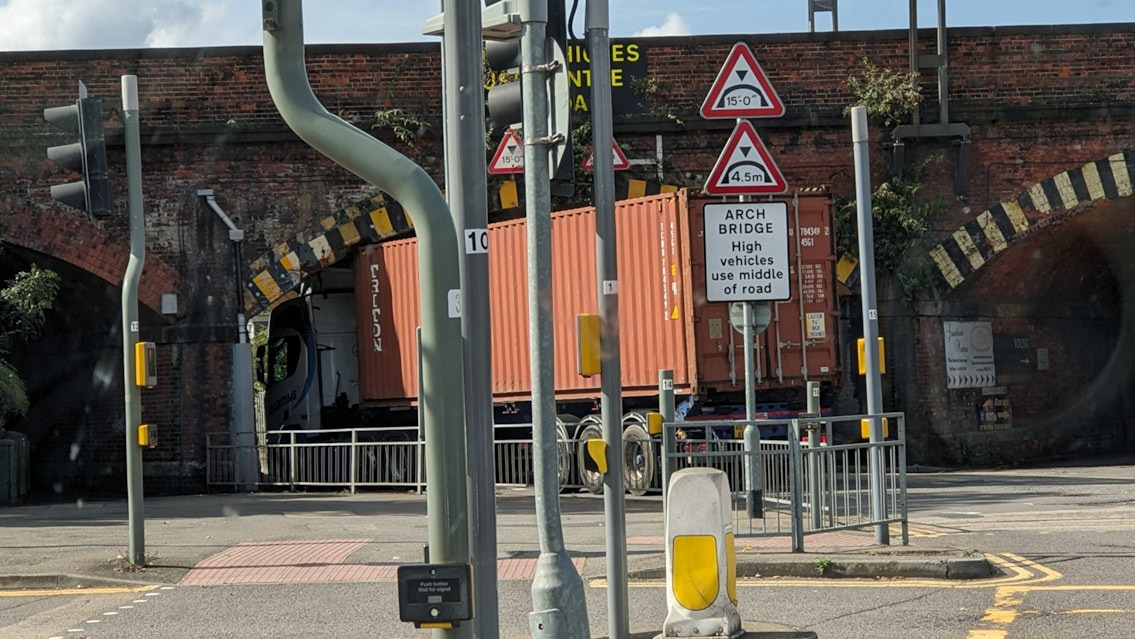

Harlaxton Road bridge in Grantham has been named the second most frequently struck railway bridge in Britain, prompting Network Rail to launch a high-tech monitoring trial to cut disruption and repair costs. The structure, which carries the East Coast Main Line across a six-road junction, was hit 18 times in 2024/25, up from 14 the previous year. Only Watling Street bridge on the A5 in Hinckley saw more incidents, with 22 strikes recorded. Barrowby Road bridge, less than half a mile away, also made the national top ten with 11 hits.
New figures show there were 1,666 recorded bridge strikes across Britain in the year to 31 March – roughly one every five hours. The resulting delays totalled over 186,000 minutes, the equivalent of more than 120 days, and cost the rail industry around £12 million in cancellations and disruption.
In response, Network Rail has secured £50,000 to pilot a remote monitoring system at Harlaxton Road. Developed in partnership with risk-management firm BES Group, the trial will install cameras and impact-sensing equipment before the end of December. The three-month test is designed to dramatically speed up post-strike inspections, allowing engineers to check the structure within seconds rather than dispatching teams trackside.
The technology sends immediate alerts when a collision occurs, providing video and sensor data in real time. Network Rail hopes that faster assessments will reduce disruption for passengers and improve safety for maintenance staff. The bridge already features warning signs, chevrons and protective beams, and the new trial aims to further mitigate the impact of repeated strikes.
With the peak Christmas haulage season in full swing, Network Rail is urging drivers to check vehicle heights and plan routes carefully under the campaign slogan Wise Up, Size Up. Its bridge strike champions continue to visit haulage firms nationwide to promote safer route planning and awareness of low-clearance structures.
Richard Woodford, Network Rail asset engineer, said:
“Bridge strikes cost the British rail industry millions of pounds a year in delays, cancellations and repairs. Harlaxton Road already has prominent signage, so this trial using technology aims to cut inspection times after a strike from hours to seconds in many cases. This means trains can run again much sooner, boosting the reliability of the railway and potentially saving hundreds of thousands of pounds in this one location alone.”
Martin Frobisher, Network Rail’s group safety and engineering director, said:
“With the busiest delivery period of the year under way, we’re reminding all drivers and operators to Wise up, Size Up – ensure they know their vehicle heights before they set off, plan their routes carefully, and watch for low bridge signs. A few moments of vigilance can prevent serious delays and keep everyone moving safely this festive season.”
Hideo Takano, senior structures advisor at National Highways, said:
“Bridge strikes can cause hours of disruption and pose serious safety risks. We understand how frustrating these delays are for road users, which is why we work alongside other transport authorities through the Bridge Strike Prevention Group to reduce the number of incidents. Two-thirds of strikes on our bridges involve vehicles carrying loads on open trailers. To help prevent them, we urge drivers to take three simple steps: know your vehicle height, plan your route and make sure your load is secure.”
Image: Network Rail