LNER reveals Serenza trains set to redefine East Coast travel
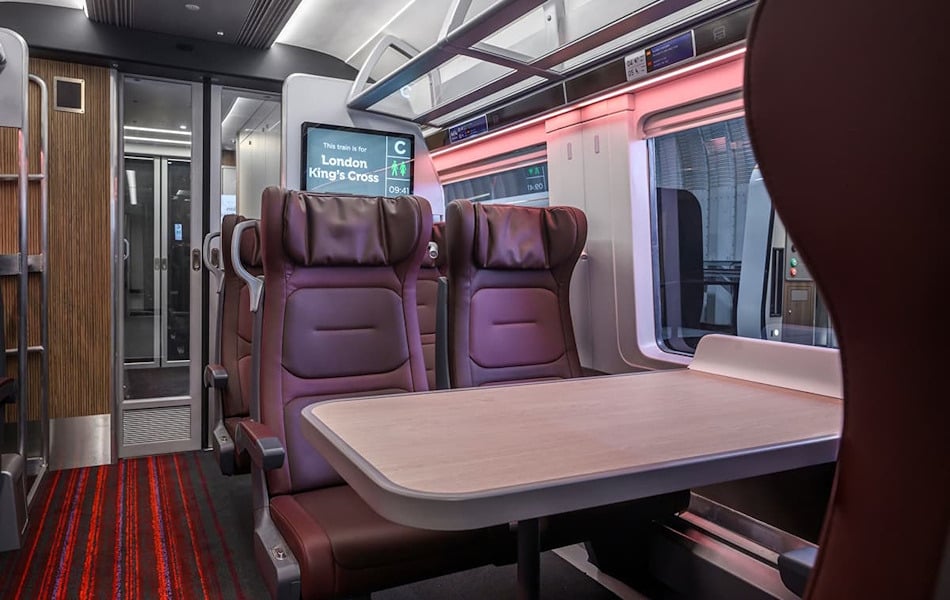

LNER has unveiled details of a new fleet of intercity trains set to transform long-distance travel on the East Coast Main Line, promising greater comfort, higher capacity and improved reliability for passengers. The operator has released the fleet name along with new interior images, offering an early look at what customers can expect when the trains enter service in the coming years.
The 10 new trains are being built by Spanish manufacturer CAF and financed by rolling stock company Porterbrook. Their arrival is intended to support sustained growth in passenger numbers on the route, which stretches from London to Scotland. LNER says demand has risen consistently since the Covid pandemic, with more than 24 million journeys recorded in 2024–25. A major timetable change introduced in December 2025 has already added around 60,000 extra seats per week, and the new trains are expected to provide a further boost to capacity.
The fleet will be designated Class 897 and will be the first new trains to be introduced under the banner of Great British Railways, the forthcoming national body set to oversee Britain’s rail network. As a result, the trains will operate under Great British Railways and carry its branding both inside and out, marking a symbolic shift as the industry moves towards public ownership.
To distinguish them from LNER’s existing Azuma fleet, the Class 897 trains will carry the name Serenza. LNER says the name blends the idea of serenity with a modern, energetic feel, reflecting the calm and comfortable environment the operator wants to create onboard.
Technically, the trains represent a first for long-distance services in the UK. They will be tri-mode units, capable of running on overhead electric power, diesel engines or battery power. This flexibility will allow them to operate across the full LNER network, which spans close to 1,000 miles. Each 10-carriage train will provide 569 seats across Standard and First Class, along with dedicated wheelchair spaces and companion seating.
Considerable emphasis has been placed on interior design, shaped by customer and stakeholder feedback. Seating in both classes has been reworked to improve comfort, with reclining seats in First Class, redesigned cushions, wider headrests and enhanced side bolsters. LNER says materials have been chosen with durability and sustainability in mind, aiming to balance long-term use with environmental considerations.
Digital features will also be prominent. Each carriage will include new information screens displaying live journey and safety updates, while five water bottle refill points will be installed throughout each train. Power provision has been updated too, with plug sockets at every seat and USB-C ports added for device charging, including integrated power bars at table seats.
Facilities for cyclists have been redesigned following feedback, with new bike storage areas using simpler strap systems to make securing bicycles quicker and easier. Lighting has also been softened, with mood and table lighting introduced in First Class to create a more relaxed atmosphere, particularly for early morning and evening services.
Standard Class passengers will see changes as well, including a revamped Café Bar offering food and drink sourced from suppliers along the LNER route. Digital menu screens will provide real-time information on availability. Toilets across the train have also been updated, featuring redesigned wash basins, baby changing facilities and clearer signage in accessible toilets.
The tri-mode capability of the trains is expected to bring environmental benefits, allowing battery power to be used when approaching or leaving stations without overhead wires, reducing reliance on diesel. While most of the interior design has now been agreed, LNER says some minor adjustments may still be made before the project reaches its final design freeze.
When introduced, the Class 897 fleet will replace LNER’s InterCity 225 trains, which are approaching 40 years in service. The high-speed sets have been a mainstay of the East Coast route for decades, carrying hundreds of millions of passengers, but are now nearing the end of their operational life.
The new trains are due to enter service in the coming years, with LNER saying further updates will be shared as the programme develops.
Dr Linda Wain, Engineering Director at LNER, said:
“This is an exciting milestone for LNER as we reveal an insight into what our customers can expect from their journeys in the future and unveil a name. Our new fleet will bring more comfortable, more reliable, and greener journeys across the East Coast Main Line for decades to come and we are looking forward to their introduction in the coming years. Reaching this stage has taken a huge amount of work and it has been great to work in partnership with CAF as we design this new fleet of trains. As LNER continues to welcome more customers onboard, these trains will be vital in helping to meet demand for train travel while delivering a new, modern experience for our customers.”
Rail Minister, Lord Hendy, said:
“We’re investing in our railways and bringing train operators into public ownership to put passengers back at the heart of what the railway does. This new fleet will be introduced under Great British Railways and will make travel even better for passengers. A better, more attractive railway will drive economic growth, jobs and homes along the entire East Coast Main Line, and follows the new ECML timetable which is transforming journeys by unlocking thousands of extra seats and more cheap fares."
Image: LNER
Related Stories