On This Day in 1896, the Glasgow Subway Opens

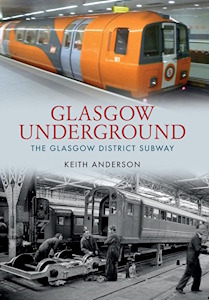
On this day in 1896, Glasgow entered a new era of urban transport with the opening of the Glasgow District Subway. The system began public operation on 14 December, offering the city a fully underground railway at a time when such infrastructure was still rare worldwide. Its launch placed Glasgow among a small number of cities pioneering rapid transit beneath their streets.
Authorised earlier in the decade, construction of the Subway began in 1891 following an Act of Parliament. The work involved driving tunnels through the dense urban landscape to create a continuous circular route beneath the city. By the time it was completed, the railway formed a loop of approximately 6.5 miles, linking 15 stations and providing a new means of travel across Glasgow.
From the outset, the Subway was designed as a self-contained system. Trains operated around the circular route in both clockwise and anticlockwise directions, allowing passengers to travel efficiently between districts without the need for surface transport. Its compact dimensions and tight curves gave the system a character that has remained distinctive ever since.
At its opening, the Glasgow District Subway used a cable-hauled system rather than electric traction. Trains were moved by an endless cable powered by stationary steam engines, with separate cables for each direction of travel. This method reflected contemporary engineering practice and was similar to cable systems used elsewhere during the late 19th century.
The first day of operation was marked by an incident later that evening, when a collision occurred beneath the River Clyde. Several passengers were injured, and the accident led to the closure of the system shortly after its inaugural day. Services did not resume until January 1897, following investigations and remedial work.
Despite this early setback, the Subway quickly established itself as a vital part of city life. Its fixed circular route and underground alignment allowed it to avoid the congestion that affected surface transport, and it soon became a regular means of travel for people moving around Glasgow’s central and western districts.
Ownership and operation of the Subway changed over time, with Glasgow Corporation taking control in 1923. A major technological shift followed in 1935, when the original cable system was replaced with electric traction using a third rail, modernising operations while retaining the original tunnels and route.
Today, more than a century after it first opened, the Glasgow Subway remains in continuous use on the same circular alignment introduced in 1896. As the third-oldest underground metro system in the world, its anniversary serves as a reminder of the city’s long-standing commitment to public transport and engineering innovation.
Related Reads