On This Day in 1957, Lewisham Rail Crash

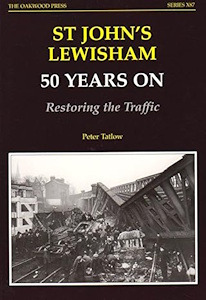
On this day in 1957, one of Britain’s worst peacetime rail disasters unfolded near St Johns station in Lewisham. In thick evening fog, shortly after 6pm on 4 December, a steam-hauled express travelling from London Cannon Street to Ramsgate collided with the rear of an electric commuter service from Charing Cross to Hayes, which had been brought to a stand at a red signal beneath a railway bridge.
The Hayes service consisted of ten coaches and was heavily loaded, carrying close to 1,500 passengers. Behind it, the eleven-coach express, hauled by Battle of Britain class locomotive 34066 Spitfire and carrying about 700 passengers, failed to stop in time. It struck the stationary train at around 30 mph, telescoping one of the rear coaches of the electric unit and throwing the steam locomotive’s tender and leading coach sideways into a supporting column of the bridge above.
The force of the impact caused two of the bridge girders to collapse onto the leading coaches of the express, greatly worsening the destruction. The scene was one of chaos, with wrecked carriages crushed beneath steelwork. A train approaching on the bridge above stopped just in time, narrowly avoiding a second collision that could have claimed even more lives.
Emergency services, railway staff and local volunteers responded rapidly despite the fog and difficult conditions. Ambulances, fire crews, police, St John Ambulance personnel and civilians worked side by side to rescue the injured. By about 10:30pm all casualties had been removed from the site, while breakdown crews and cranes moved in to begin the complex task of clearing wreckage.
In total, 90 people lost their lives, with a further 173 injured. The fatalities were concentrated in the forward coaches of the express and the shattered coach of the Hayes train. The express driver faced manslaughter charges following the inquiry, though he was acquitted after a second trial. The official investigation later concluded that the driver had failed to reduce speed after passing caution signals, leaving insufficient time to stop at the danger aspect.
The crash caused major disruption, blocking all lines at the site. The track beneath the bridge reopened on 12 December, less than two weeks after the accident, and a temporary structure was installed above in January to restore full working. The Lewisham crash remains a stark reminder of the importance of signalling awareness and automatic warning systems, whose wider adoption was accelerated in its aftermath. Remembered each year, it stands as one of the darkest chapters in the history of Britain’s railways.
Related Reads