Latvia Orders 16 Škoda Battery-Powered Trains for Regional Services
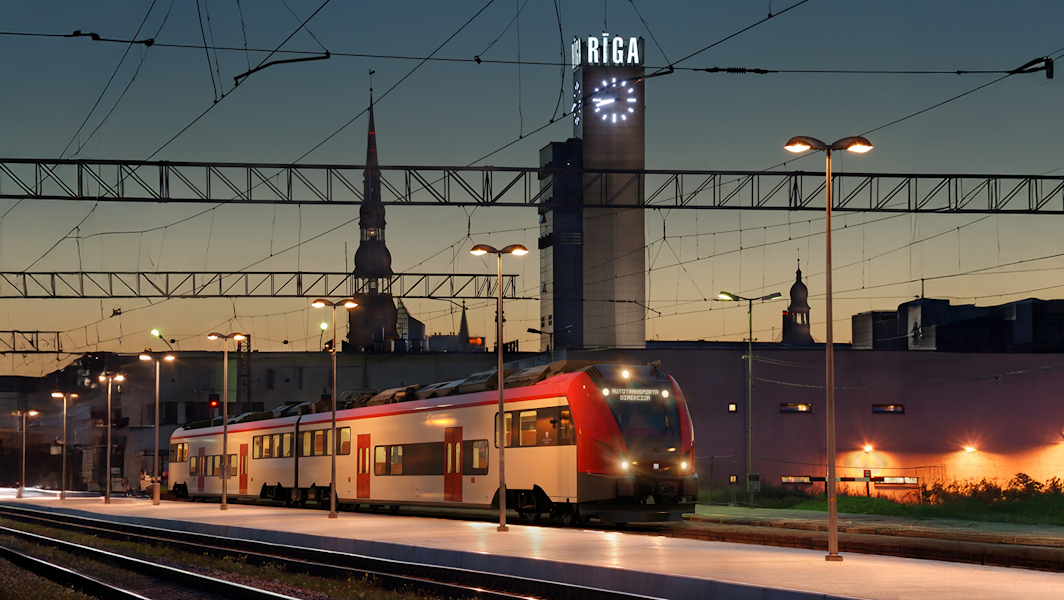

Latvia is set to take a major step forward in modernising its regional rail network with the introduction of battery-powered trains. Autotransporta direkcija (ATD) has announced that the Škoda Group will supply up to 16 battery electric multiple units (BEMUs) for regional services, in a deal valued at nearly EUR 160 million. The contract covers nine base units, an option for seven additional trains, as well as spare parts and training, with the first vehicles expected to enter service in the first half of 2029.
The Latvian order follows Škoda Group’s recent launches of battery trains in the Czech Republic in 2024–25 and a contract for up to 36 battery trains in Slovakia. Notably, these will be the first Škoda battery-powered vehicles designed for the 1,520 mm gauge, marking a new evolution of the company’s single-deck regional train platform for the Baltic markets. The project is co-financed by Latvia’s state budget and EU Cohesion Funds, supporting the country’s push towards modern, zero-emission mobility.
Petr Novotný, CEO of the Škoda Group, said:
“Our new-generation battery units confirm that clean and efficient regional transport can be a reality today. And this without the need for extensive investment in infrastructure modernisation. The combination of electric and battery operation brings lower operating costs for transport operators and fast and comfortable connections without transfers for passengers. We see strong export potential for this solution, especially in Central and Eastern Europe. We are very pleased that we have concluded another export order for this type of vehicle in such a short time and that our solution has outperformed the competition here. At the same time, the Škoda Group is confirming its position as a leading European group in the field of rolling stock and solutions for zero-emission mobility.”
Jānis Lapiņš, Chairman of the Board of ATD, added:
“Battery-powered electric trains represent a significant investment for Latvia, aimed at strengthening the role of railways as the backbone of public transport and improving the quality and accessibility of passenger transport. During the journey, passengers will be able to enjoy all the modern conveniences: air conditioning, reduced noise and vibration, modern equipment, electrical sockets, and USB-C charging points. The new trains will be adapted to all passenger groups and will meet the latest European accessibility requirements, equipped with a modern information system and spaces for passengers in wheelchairs. Conditions for passengers with bicycles will also be improved. While old diesel trains usually have a high floor and only three spaces for bicycles, the new battery trains will have space for eight bicycles in the low-floor section, four in a vertical position and four in a horizontal position.”
Each two-car unit will operate on 3 kV DC and 25 kV 50 Hz AC systems, with a top speed of 160 km/h under trolley power and 120 km/h on battery. Seating capacity is 188 passengers, including 24 in first class, with 2+2 seating in first class and 3+2 in second class. The low-floor design, with a height of 600 mm above the rail, ensures accessible boarding for all passengers, and the train provides dedicated spaces for bicycles and other amenities designed for comfort on regional journeys.
The delivery of these trains represents a significant investment in clean, efficient, and passenger-friendly rail transport, aligning Latvia with other European countries embracing zero-emission regional mobility.
Image: Škoda Group