New Great British Railways brand unveiled as landmark reforms move forward
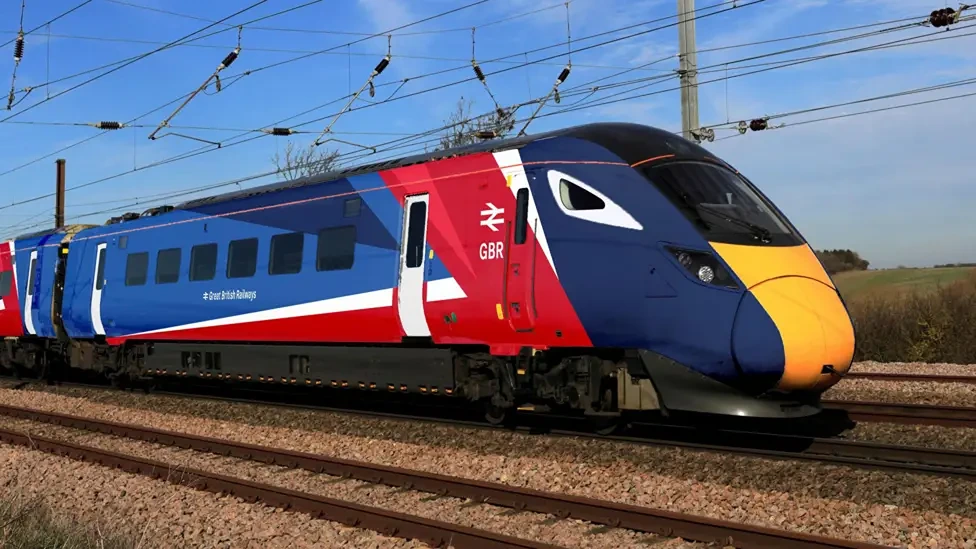

Passengers will soon begin to see a striking new look across Britain’s rail network, as the government unveils the branding for Great British Railways and Parliament debates the legislation that will formally establish the new body. GBR is set to become the publicly owned organisation responsible for overseeing the rail system, marking one of the most significant shifts in railway governance for decades.
The introduction of GBR branding will begin next spring, appearing on trains, stations, websites and digital channels in a gradual rollout. The design, rooted in red, white and blue with angular lines inspired by the Union Flag, incorporates the iconic double arrow symbol, linking the new brand to Britain’s historic rail identity. Ministers say this unified national identity is intended to replace the fragmented image passengers see today, with seven major operators already under government control.
The reforms come alongside the Railways Bill, now under debate in the House of Commons, which will bring 17 organisations together under one structure. Supporters of the legislation argue that centralising responsibility will cut bureaucracy and improve accountability, especially after years of public dissatisfaction with reliability, ticketing complexity and operator performance. The government has also pledged a first-in-three-decades rail fare freeze as part of its reform package.
Across state-run operators, officials say improvements are already visible. South Western Railway has expanded its Arterio fleet fourfold, raising capacity by nearly 10%. On the East Coast Main Line, timetable changes will add 10,000 extra LNER services annually, while Southeastern has deployed £2 million of new camera and video fault-detection technology to speed up maintenance responses.
The GBR brand will also feature in a new one-stop ticketing app designed to simplify journey planning and purchasing. It will offer fee-free booking and include support for Passenger Assist, allowing disabled users to request help during the ticket-buying process. A preview of the new identity will be displayed this week at major stations including London Bridge, Birmingham New Street, Glasgow Central, Leeds and Manchester Piccadilly, with a special one-day showcase at London Bridge featuring a Hornby model and a Train Sim World 6 demonstration.
Transport Secretary Heidi Alexander said:
"The future of Britain’s railways begins today. I’m immensely proud to unveil the new look for Great British Railways as we deliver landmark legislation to nationalise our trains and reform the railway so it better serves passengers. This isn’t just a paint job – it represents a new railway, casting off the frustrations of the past and focused entirely on delivering a proper public service for passengers. With fares frozen, a bold new look and fundamental reforms becoming law, we are building a railway Britain can rely on and be proud of."
Mayor of the East Midlands, Claire Ward, added:
"This is a huge boost for passengers not only in the East Midlands but across the country. For too long, our trains have been overcrowded, unreliable and confusing to navigate. Great British Railways will make journeys simpler, faster and fairer for everyone. Passengers here will be able to plan and pay for trips more easily with the app, while investment in new trains and improved services, backed by the decision to base Great British Railways’ headquarters in Derby, will mean more seats, more comfort and more reliable connections between our towns and cities. This is about giving people a railway that actually works for them, one that helps people get to work, study, or visit friends and family with confidence and ease."
Alex Robertson, Chief Executive of Transport Focus, said:
"Today’s second reading of the Railways Bill, alongside a preview of the logo and ticketing app, marks another step on the journey towards a railway built around passengers. As well as what is written into law, the success of Great British Railways will depend on its people and culture and today gives us a glimpse into what that could look and feel like."
Jacqueline Starr, Executive Chair and CEO of Rail Delivery Group, said:
"The Railways Bill presents an opportunity to bring the industry together with a single focus on delivering for our customers and we are determined to play our part in getting it right. As the industry evolves, our priority remains supporting the rail network to keep people moving and making sure we are delivering a better railway for everyone across the country, now and in the future. We welcome the government’s commitment to improving the services our customers depend on every day and we will continue to work closely with industry partners to support a smooth transition to Great British Railways."
Image: Department for Transport