On This Day in 1984, Summit Tunnel Fire

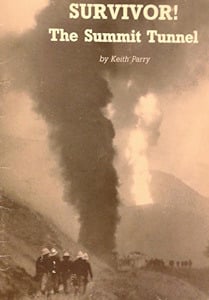
On this day in 1984, a major rail incident occurred inside the Summit Tunnel on the trans-Pennine route between Littleborough and Todmorden, on the boundary of Greater Manchester and West Yorkshire. In the early hours of 20 December, at about 05:50, British Rail freight train 6M08 entered the tunnel while travelling south from Haverton Hill on Teesside to the Glazebrook oil terminal near Warrington. The train was hauled by Class 47 locomotive 47 125 and consisted of thirteen tank wagons carrying more than one million litres of four-star petrol. What followed would become one of the most severe railway fires ever experienced in Britain.
Around one-third of the way through the 2,885-yard tunnel, a roller bearing on the leading axle of the fourth tanker failed. The resulting overheating caused the wagon to derail, dragging several tankers behind it off the rails. The locomotive and the first three wagons remained upright, but one of the derailed tankers overturned and began leaking petrol onto the trackbed. Vapour from the escaping fuel is believed to have been ignited by the damaged axlebox, starting a fire within the confined space of the tunnel.
The three members of the train crew saw flames spreading beneath the opposite line and made the decision to leave the train. They walked approximately a mile to the southern portal of the tunnel, where they contacted the signalman and raised the alarm. Fire services from Greater Manchester and West Yorkshire attended and initially attempted to tackle the blaze from inside the tunnel using breathing apparatus and hoses. With the help of the crew, the locomotive was used to uncouple and haul the first three intact tankers clear of the tunnel to safety.
As the fire intensified, the remaining tankers were heated by the flames, causing their pressure relief valves to open and release petrol vapour. This vapour ignited violently, forcing jets of flame against the tunnel lining and making further direct firefighting impossible. The extreme heat caused sections of brickwork to spall and partially melt. The tunnel’s ventilation shafts then acted as chimneys, expelling fuel-rich gases which ignited above ground and produced towering columns of flame, throwing burning debris across the surrounding hillside.
Local roads were closed and around 200 residents from nearby Walsden were evacuated as a precaution. Fire crews changed tactics, pumping high-expansion foam down ventilation shafts in an effort to smother the fire by cutting off its oxygen supply. Visible flames largely subsided by the afternoon of 21 December, although the incident was not officially declared under control until the evening of 24 December. Firefighters remained on site into early January 1985 to monitor conditions and deal with remaining hazards.
In total, around 809,000 litres of petrol were consumed by the fire, although significant quantities were saved or later recovered. Remarkably, no one was killed or seriously injured during the incident. While track, signalling and electrical equipment were destroyed over roughly half a mile of railway, the 19th-century brick tunnel itself survived largely intact despite the intense heat. After extensive repairs, the line through Summit Tunnel reopened to rail traffic on 19 August 1985, and the fire remains a powerful reminder of both the risks of transporting hazardous materials and the resilience of Victorian railway engineering.
Related Reads