Slovakia Orders 36 Battery-Powered Trains to Modernise Regional Rail
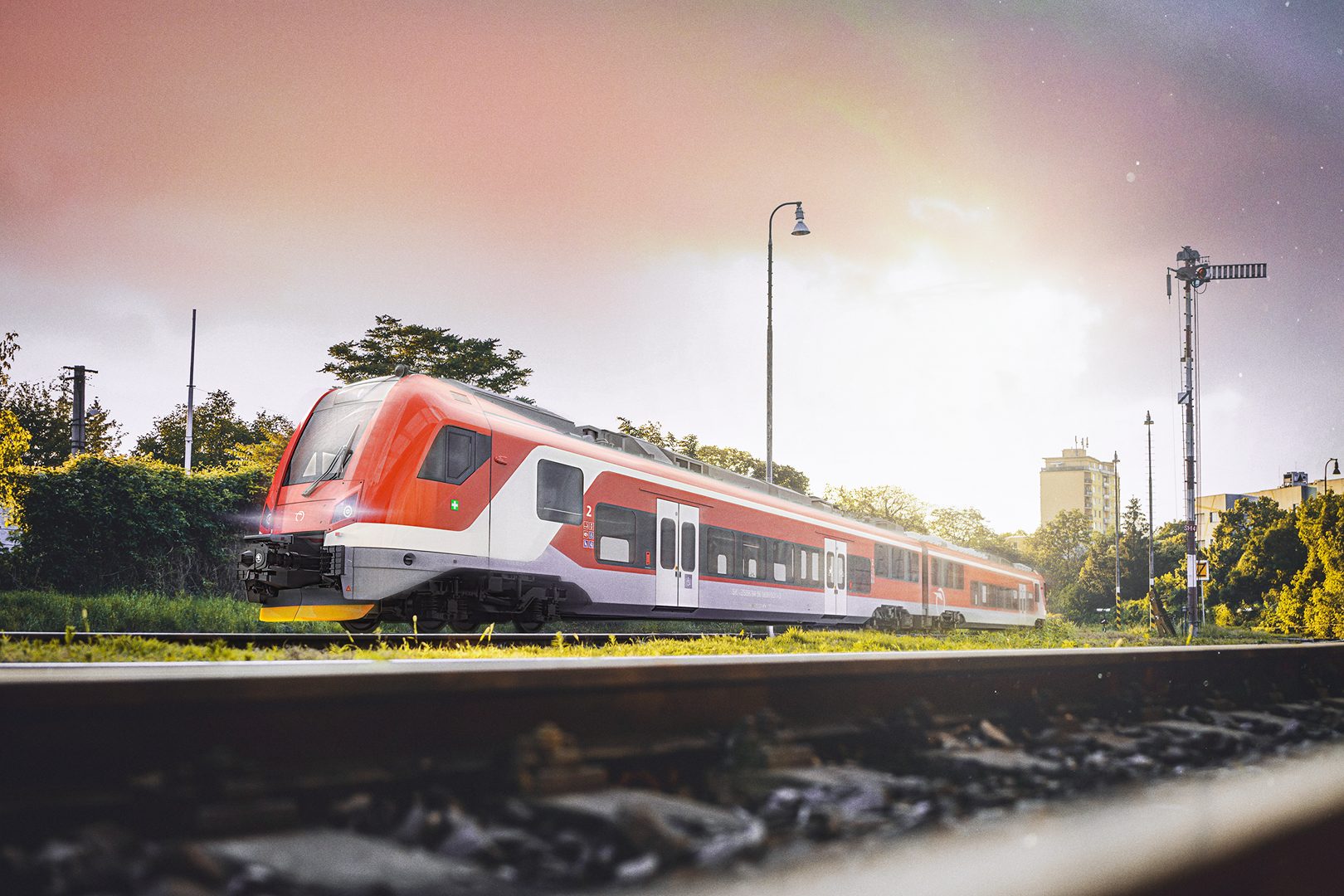

Škoda Group, together with consortium partners ŽOS Trnava and Železničná spoločnosť Slovensko (ZSSK), has signed a framework agreement to supply up to 36 two-car battery-powered electric trains (BEMU), valued at nearly EUR 332 million. The Slovak national rail operator plans to acquire the first 16 units next year, with an option to purchase an additional 20 in subsequent deliveries. The new trains are expected to modernise regional rail services, replace diesel trains on non-electrified lines, and allow passengers to travel seamlessly across electrified and non-electrified routes. Production will be partially carried out in Slovakia through ŽOS Trnava.
The battery trains build on the established Panter electric train design and are enhanced with a traction battery system. Capable of reaching speeds of 160 km/h under overhead lines and up to 120 km/h on battery power alone, the trains will cover at least 80 kilometres on non-electrified sections. Batteries will recharge both during operation via overhead lines and at designated charging points, with braking energy recovered on non-electrified sections to improve efficiency.
Each two-car unit will seat 157 passengers and feature the European ETCS Level 2 safety system. Interiors include air conditioning, on-board Wi-Fi, USB-equipped 230 V sockets, and low-floor access for passengers with reduced mobility, parents with prams, or cyclists. Modern information systems will be installed throughout the trains, which are designed for quiet and smooth operation to minimise disruption to communities along the routes.
The adoption of battery-powered trains is expected to significantly reduce diesel usage on regional lines, cutting annual emissions by millions of kilograms of pollutants and tens to hundreds of millions of kilograms of CO2 compared to current operations. Slovakia’s rail network spans approximately 3,630 kilometres, but only 1,585 kilometres are electrified, highlighting the potential of battery trains to rapidly expand zero-emission services without extensive infrastructure upgrades.
Tomáš Ignačák, Vice-Chairman of Škoda Group, said:
“We see battery trains as a fast and realistic path to zero-emission regional transport in Slovakia. They combine the advantages of classic electric units with operation on non-electrified lines, without the need for high investments in infrastructure. We are delighted to become a technology partner of Slovak Railways in this fundamental step towards modern and sustainable mobility. Our experience with battery trains shows that passengers appreciate their deployment, with passenger numbers on these lines increasing by up to tens of percent.”
Ivana Piňosová, CEO of ZSSK, added:
“It is a great honour for me that ZSSK is a pioneer in public rail transport using alternative propulsion systems. We will be the first in Slovakia to offer passengers zero-emission electric battery trains. These 16 trains will help replace outdated motor vehicles, as they can operate on both electrified and non-electrified tracks. This project fits in with the vision of a modern and sustainable railway that brings greater comfort to passengers and better technical and working conditions for our employees.”
Denisa Žiláková, State Secretary of the Ministry of Transport of the Slovak Republic, said:
“Funding from European funds for battery electric units is an important milestone on the road to modern and environmentally friendly rail transport in Slovakia. This is a project that combines innovative technologies with sustainable mobility while making effective use of European resources. I believe that the new battery units will bring greater comfort to passengers, reduce emissions and help develop public transport in regions where there is no electrified infrastructure.”
The new battery trains represent a major step forward in Slovakia’s efforts to expand sustainable, zero-emission regional transport, offering both environmental benefits and improved passenger experience while reducing reliance on diesel-powered services.
Image: Škoda Group