Stadler to give Swiss GTW trains second life on Hungary’s rail network
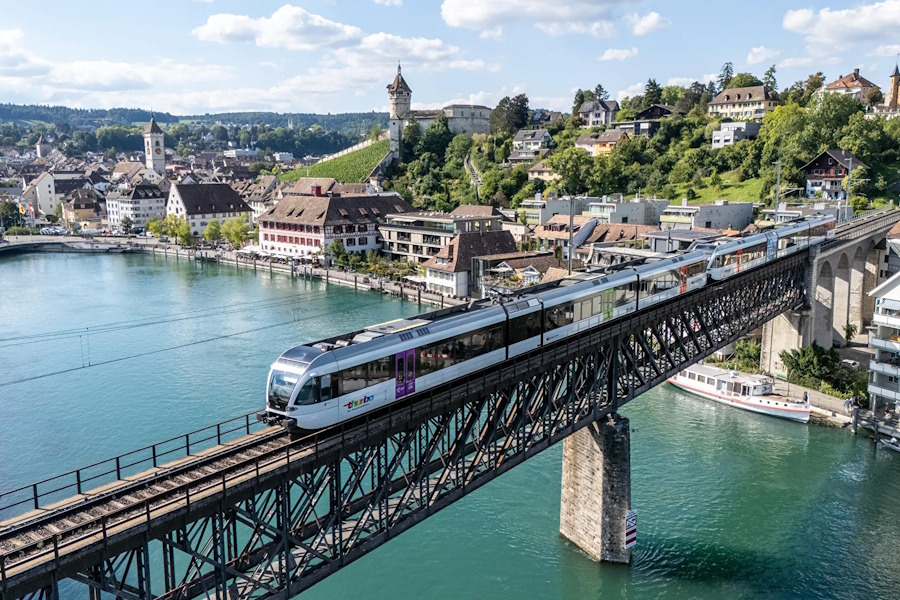

Stadler has confirmed plans to modernise and resell 93 GTW trains formerly operated by Swiss regional railway Thurbo, allowing the fleet to enter service with the Hungarian State Railways (MÁV) and extending the trains’ operational life.
Under the agreement, the articulated GTW units will undergo a comprehensive refurbishment programme before being transferred to Hungary, where they will supplement MÁV’s existing rolling stock. The project is intended to deliver both environmental and financial benefits, while providing Hungarian passengers with an additional 14,000 seats built to a standard comparable with the FLIRT trains already in service across the country.
MÁV is facing a significant need for additional rolling stock in the coming years and, alongside plans to procure new trains, has explored the option of acquiring refurbished second-hand vehicles. Following a detailed assessment of technical requirements and the approval process needed for operation in Hungary, Stadler identified Thurbo’s GTW fleet as a suitable candidate to meet this demand.
Stadler subsequently submitted proposals to both Thurbo and MÁV covering the purchase, modernisation and resale of 93 vehicles. After extensive negotiations, Stadler and MÁV agreed the terms of the transaction and signed a contract covering the sale and conversion programme.
The refurbished trains will be delivered to Hungary in annual batches between 2027 and 2034. Stadler said the programme will allow MÁV to increase capacity more quickly than would be possible through the procurement of new rolling stock, while also replacing older vehicles and improving passenger comfort.
Each train will be fitted with a new passenger information system, video surveillance, sliding steps adapted to Hungarian platform heights, and updated onboard computers for drivers. The trains will also receive a combined Mirel and ETCS BL4 train protection system, while the propulsion equipment will be converted to operate on Hungary’s 25 kV electrification system. Externally and internally, the units will be refreshed with MÁV corporate colours and new seat coverings.
Modernisation work is expected to take around 12 weeks per train. Prototype units are currently being developed in Switzerland, with Stadler also establishing a service facility in Hungary to support the series conversion programme.
Stadler said the project demonstrates how refurbishment and life extension of modern multiple units can provide a technically and financially competitive alternative to purchasing new trains. The GTW units represent the earliest large production series delivered by Stadler over the past two decades, and the company believes the programme could serve as a model for similar projects in the future.
Thurbo’s GTW fleet originally comprised 110 vehicles. In 2021, the operator opted to replace the trains with 107 new FLIRT Evo units from Stadler, with the existing GTW fleet being gradually withdrawn as the new trains enter service, a process due to be completed by 2034.
Image: Stadler
Related Stories