United vs. Brookfield: How Freightliner’s Land Price Could Derail the ‘Wembley of the North’

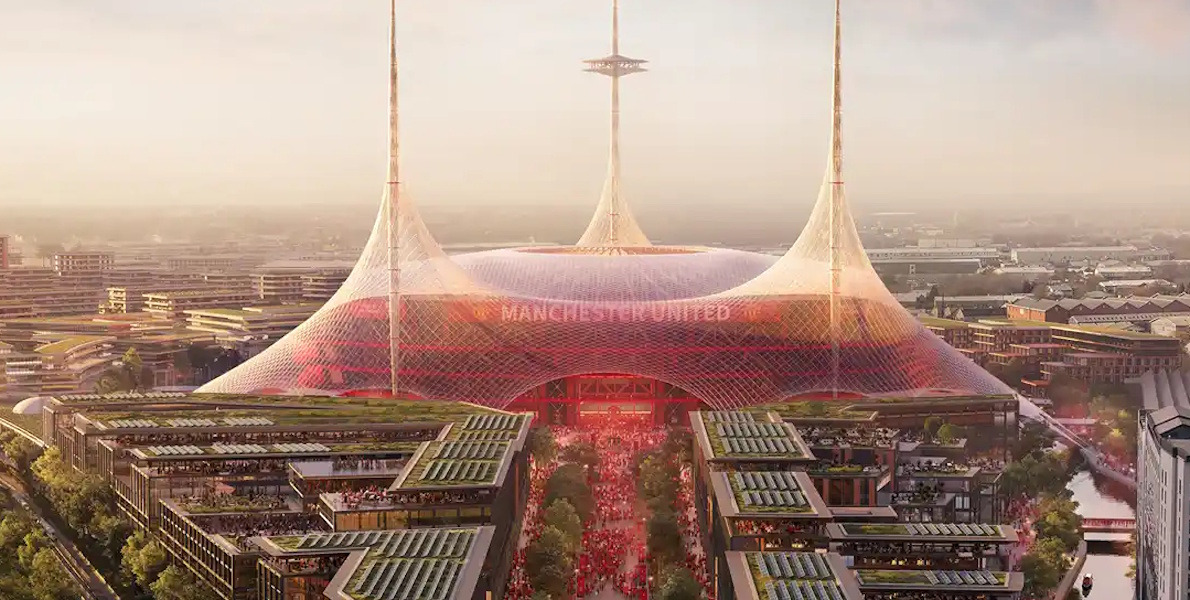
Manchester United’s vision for a new 100,000-seat stadium beside Old Trafford has been sold as a statement project: a modern arena on a global scale, positioned as the centrepiece of a sweeping regeneration of the surrounding district. The club and its backers have presented it as far more than a football ground, tying it to a broader redevelopment pitch that has been costed in the billions and framed as a major economic catalyst for Greater Manchester.
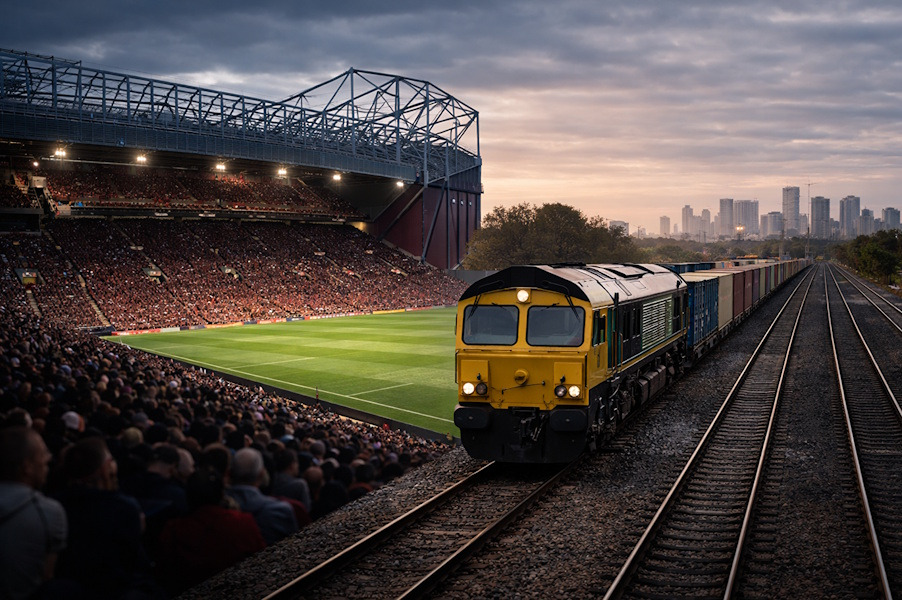
But behind the glossy renders and big numbers sits a stubborn reality of land, leverage and infrastructure. A key parcel needed for the preferred layout overlaps with an active rail freight terminal in Trafford Park used by Freightliner. That makes the stadium plan unusually vulnerable to a single, highly specific constraint: until the freight land question is resolved, the headline project cannot move from concept into a clear construction pathway.
This is where the dispute hardens into a numbers game. Reports have put Freightliner’s asking price for the terminal land at around £400 million, while Manchester United’s valuation has been reported at roughly £40–50 million. The gap is so wide it reads less like a normal commercial negotiation and more like a standoff over who blinks first, because each side can argue it is acting rationally: the club says it cannot justify an outsized premium, and the landholder knows the site has strategic value precisely because it blocks progress.
The ownership structure adds another layer. Freightliner has been described in reporting as sitting under Brookfield, a major infrastructure investor, and that matters because it shapes expectations around deal-making. A global asset manager is less likely to be swayed by local pressure or sentiment; it will tend to view the terminal as an asset with options, where time can be a negotiating tool and the price reflects not only the land but also the disruption and complexity of relocation.
Relocation itself is the part often flattened in public debate. Trafford Park is not a redundant patch of concrete; it is a working node in the rail freight network. Moving an operation like that is not as simple as naming an alternative postcode. Even where St Helens has been repeatedly cited as a potential destination, the practical sequence still bites: suitable replacement capacity, planning processes, commercial agreements, and the risk of knock-on impacts if freight flows are interrupted or displaced.
That leaves the club facing uncomfortable choices, each carrying political and financial risk. It can raise its offer and invite accusations of being forced into overpaying; it can redesign or scale elements that depend on the land; or it can look to statutory routes such as compulsory purchase, which can become slow, contentious and legally fraught. In the meantime, the stadium remains an ambition caught between civic-scale rhetoric and the hard engineering of a live freight terminal—where the most powerful force is not a cheering crowd, but a strip of land that someone else controls.
Image: Manchester United
Related Stories